How to Build Cold Outreach Email Lists Using Social Media Scraping
Build cold outreach email lists using social media scraping, from ICP to scraping, cleaning, segmenting, and automating high‑reply campaigns.

On this page (7 sections)
How to build an email list for cold outreach using social media scraping is one of the most reliable ways to turn public data extraction into qualified leads for outbound sales. When you combine social media platforms, email scraping tools, and strict email verification, you turn social signals into high quality leads for email campaigns while protecting your sender reputation.
In this guide, you will go through the entire process: define your ideal customer profile (ICP), find high‑intent pockets on social media, use an email scraper tool to start scraping emails and extract email addresses, then clean the scraped data, verify, segment, and finally run personalized outreach at scale.
TL;DR – How This Playbook Builds a Cold Outreach Email List from Social Media
You use social media platforms to find the right target audience, collect email addresses with context, clean and segment the list, personalize cold email outreach, then automate sending and optimization over time. Email scraping converts publicly available data into business email addresses plus context that you can use for efficient lead generation.
-
Define a clear ICP and the social media platforms where they are most active.
-
Find high‑intent sources on those platforms (groups, followers, commenters, event attendees, relevant job postings).
-
Use social media scraping, email scraping tools, and an email extractor or email finder to extract email addresses, job title, company websites, and profile URLs.
-
Clean the scraped data, run email verification to remove invalid addresses and risky emails, then segment by industry, job title, company size, and source.
-
Create personalized cold email sequences for each segment and automate the full pipeline from scraping → verification → CRM / ESP → follow‑ups.
The result is a smaller but much more accurate cold outreach email list with better deliverability and higher reply rates than any bought list or random mass scraping from generic online directories or web pages.
What Is Social Media Scraping for Cold Outreach Email Lists?
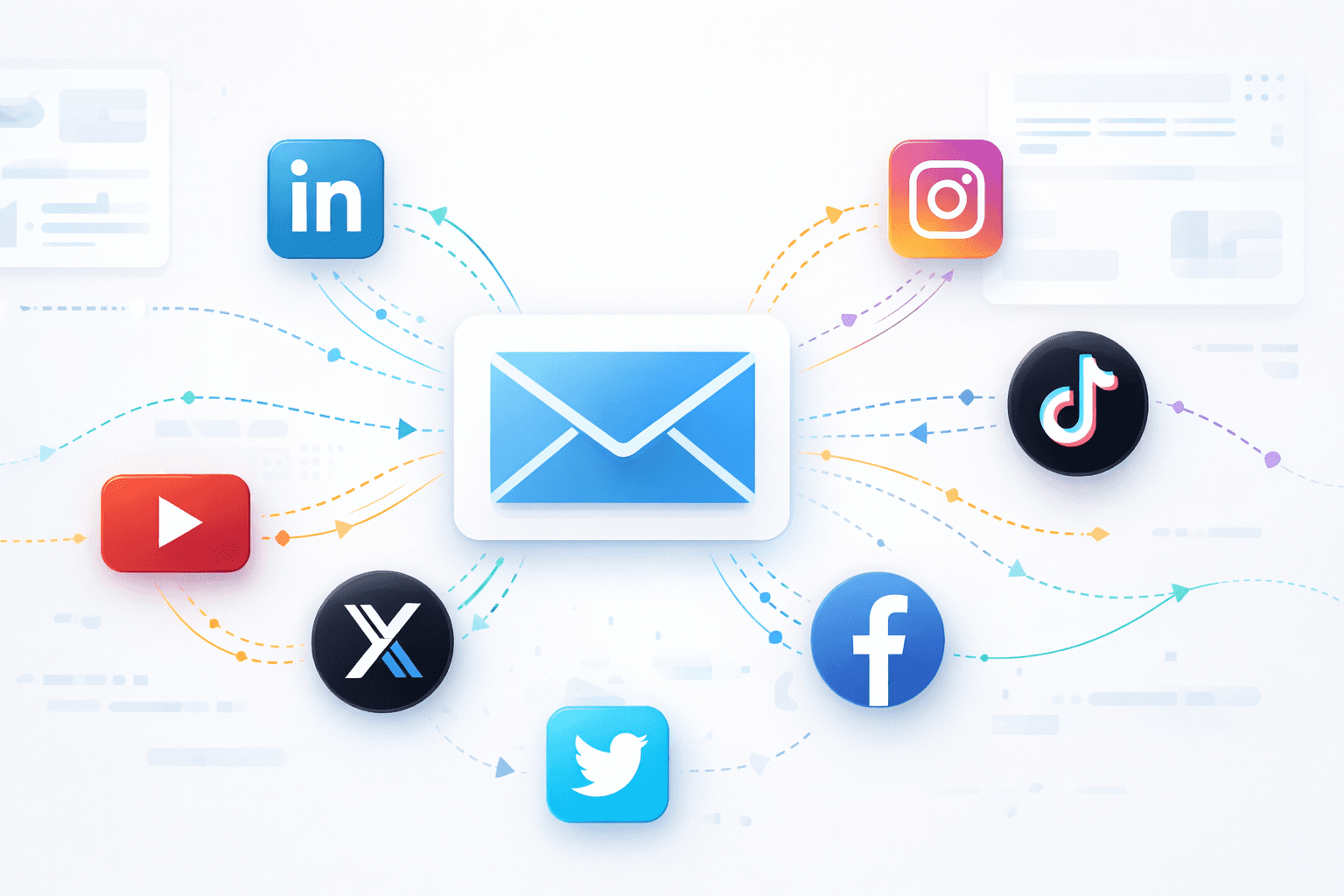
Social media scraping is the use of advanced scraping tools or an email scraper tool to perform data extraction from publicly available data on social media platforms like LinkedIn profiles, professional networking sites, Instagram bios, TikTok bios, YouTube channels, Twitter/X profiles, and Facebook pages. In practice, social media scraping pulls profile bio details, followers, commenters, and other contact details that can include business email addresses.
The scraped data becomes a list you build yourself from chosen sources, with clear context: you know which group, event, or post each contact came from. A bought list comes from a third party where you have almost no control over list building, list hygiene, or verification status, which usually leads to a higher bounce rate and weaker deliverability. Opt‑in lists are great for email marketing nurture, but in this article the focus is on cold outreach email lists built from public data and social signals, not from sign‑up forms.
Here, you use social media scraping as a strategy for efficient lead generation: you build cold outreach email lists that fit your ICP, carry richer context for personalization, and support targeted prospecting for business owners, marketers, sales teams, agencies, and teams doing creator or influencer outreach.
Step 1 – Define Who You Want to Reach and Where They Are on Social
Before you open any email scraper or bulk email finder, you must answer two questions: “who” and “where”. A clear ICP defines which part of the professional network you want to reach, and the social map tells you where to look.
Define your ICP (who)
A precise ICP keeps list building focused:
-
Industry & model: SaaS companies, agencies, local businesses, e‑commerce brands, creators.
-
Company size: 2–10, 10–50, or 50–200 employees.
-
Geography: the market you care about (US, EU, APAC, specific countries or regions).
-
Job title & seniority: founders, CEOs, Heads of Growth, sales team leaders, marketers, recruiters.
-
Pain points: lead generation, outbound sales, empty sales pipeline, unstable marketing campaigns.
Each ICP segment represents a cluster of qualified leads you want to reach with cold outreach.
Map your ICP to social platforms (where)
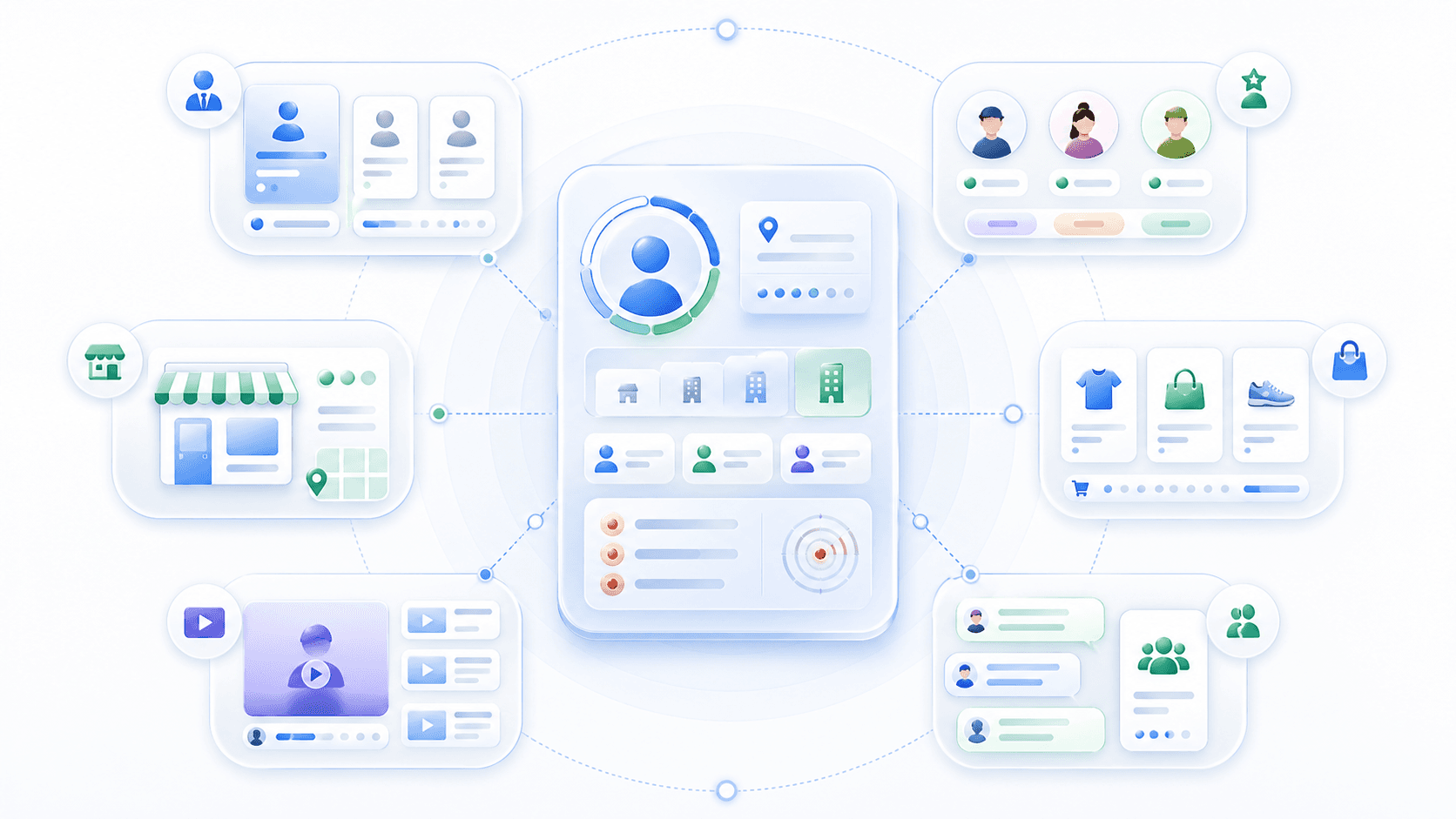
Then you map that ICP to social media and professional networking sites:
-
B2B decision makers → LinkedIn profiles, professional networking sites, LinkedIn groups, B2B Facebook pages.
-
E‑commerce and local businesses → Instagram bios, TikTok bios, Google Maps profiles (if you later add Google Maps scraping), plus company websites.
-
Marketers, creators, KOLs → Twitter/X profiles, YouTube channels, niche communities, and sometimes job boards or job postings in their niche.
For example, “SaaS founders in the US, 2–50 employees” often appear in SaaS‑focused LinkedIn groups and Facebook groups, follow outbound tools’ company pages, and regularly engage with posts about lead generation and sales pipeline growth. Once your ICP and social map are clear, all data collection and contact discovery become more precise and less wasteful.
Step 2 – Find High-Intent Prospect Sources on Those Platforms
Now you answer the question: “Exactly where do I go to find the right people?” Instead of scraping entire social media platforms or all company websites, you focus on high‑intent pockets where social signals show real interest.
Examples of high-intent sources
On each platform, prioritize:
-
Niche communities and groups
-
LinkedIn groups, Facebook groups, and other niche communities.
-
Members here often ask for tools, suppliers, and services, making them warm leads for your marketing strategies and sales team.
-
-
Events and webinars
-
Public attendee or registrant lists for webinars and live events.
-
These people already care about the topic your solution addresses.
-
-
Commenters, likers, and sharers
-
Users who comment, like, or share posts about cold outreach, email marketing, email scraper tools, and lead generation.
-
These social signals make them excellent candidates for personalized outreach.
-
-
Followers of specific entities
-
Followers of competitor company pages, best tools in your niche, or key creator profiles.
-
Following patterns often show topic interest and solution awareness.
-
Turn sources into scraping input
To gather contact information efficiently:
-
Use in‑platform search and, where helpful, Google search to find relevant groups, pages, online directories, job boards, and job postings.
-
Save the key URLs: group URLs, follower pages, event attendee pages, keyword search URLs.
-
This URL list becomes the input for your email scraping tools or advanced scraping tools.
By the end of Step 2, you should have a short, concrete list of URLs ready to feed into the scraper, which keeps the entire process focused on high‑intent, high quality leads.
Step 3 – Use Social Media Scraping Tools to Capture Emails and Profiles
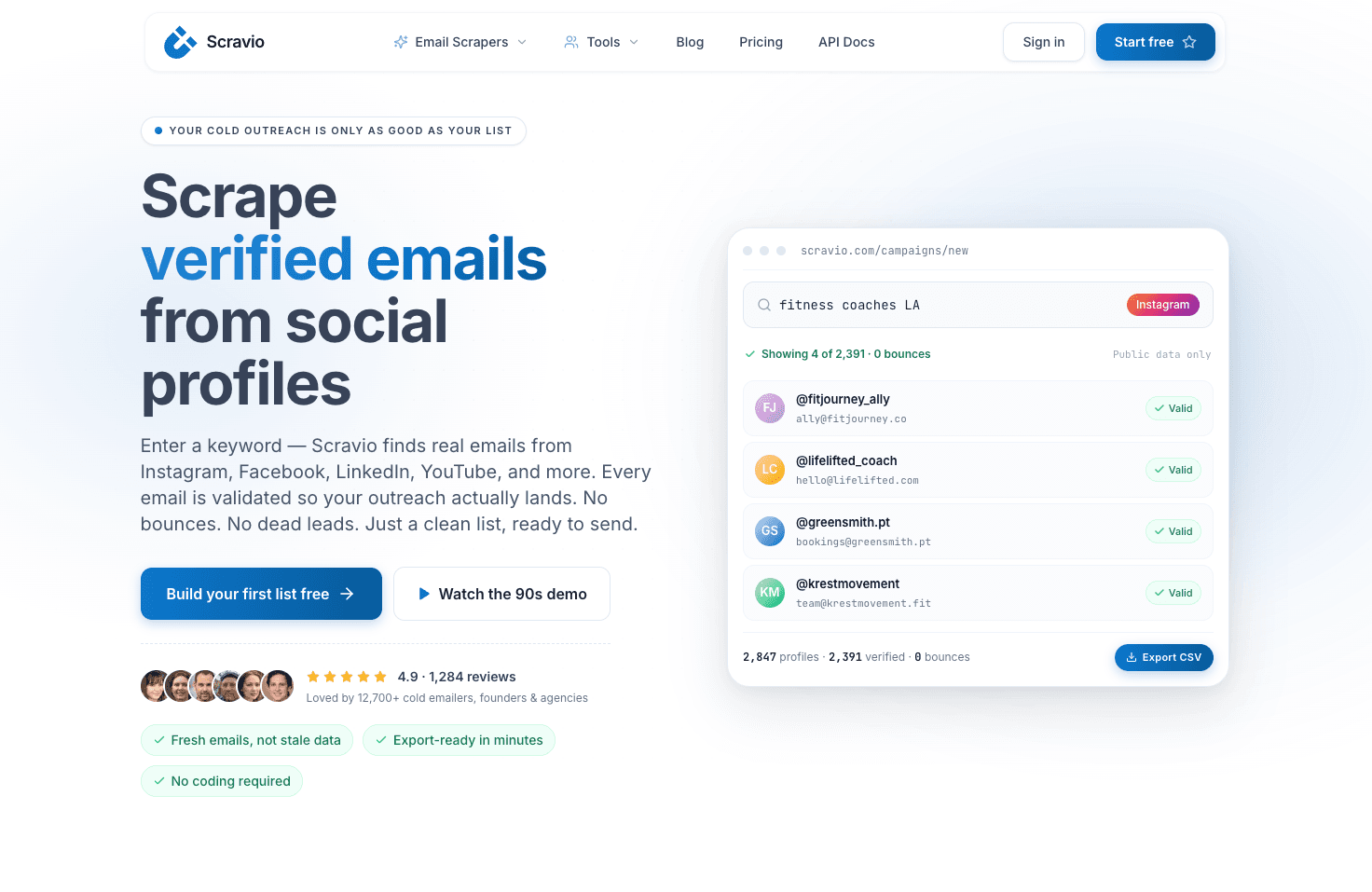
Now you turn that URL list into multiple contacts with structured data. This is where social media scraping transforms your inputs into usable contact details and other data you can push into your outreach systems.
Set up your scraping workflow
-
Choose the right tool
-
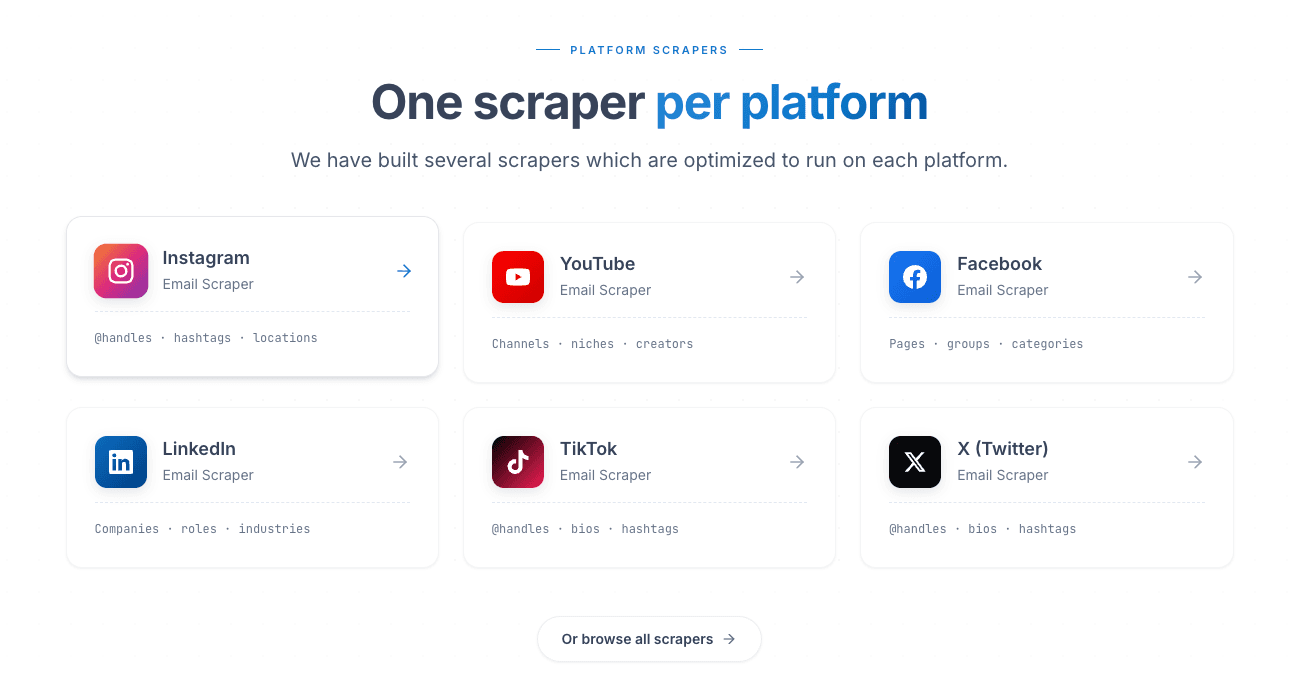
Use a social‑first email scraper or email scraper tool like Scravio to scrape emails from LinkedIn profiles, Instagram bios, TikTok bios, Twitter/X profiles, YouTube channels, and Facebook pages.
-
Prefer tools with a user friendly interface, support for bulk email extraction, and advanced features such as domain search and, optionally, API access.
-
-
Input your source URLs
-
Paste group URLs, search result URLs, follower pages, and event attendee URLs you collected.
-
This keeps web scraping and data extraction focused on high‑intent pockets rather than random crawling across the web.
-
-
Apply filters
-
Location, job title, industry.
-
Keywords in the profile bio.
-
Additional filters around domain search or company size when available.
-
Capture the right fields
When you scrape emails and extract email addresses, make sure to capture:
-
Business email addresses or work email.
-
Full name and job title.
-
Company name and, when available, company website.
-
Social profile URL.
-
Source context (group, event, post, hashtag, or campaign tag).
-
Optional: phone numbers when they are public, to support multi‑channel outreach.
Most email scraping tools allow export to CSV or Google Sheets, and sometimes via API access, so you can push the new contacts straight into CRM tools or a lead processing layer.
Safety & Ethics
To keep everything running smoothly and without getting shut down:
-
Stick to data that anyone can access – no sneaking a peek at private emails or trying to get past paywalls that are as tight as Fort Knox.
-
Scrape in chunks - this way you don't look like a bot and reduce the chance of getting your traffic blocked.
-
Don't get on anyone's bad side – stay on the right side of website terms and platform rules, and only use the contacts you scrape to get in touch with people about what they'd actually be interested in. That means following the email spam laws like the CAN-SPAM Act and the ones that apply in your region.
After step 3, you should have all your scraped data ready to go - a file full of emails, profile info, and context - ready to be verified and cleaned up before you send out any emails.
Step 4 - Clean Up & Verify Your Scraped Email List
Now it's time to turn your raw scraped data into an actual email list you can safely send to. Verifying your emails cuts down on the number of bad addresses and bounce rate, while list hygiene keeps your sender reputation intact so you don't get flagged.
Clean and verify your data
Start with basic list hygiene:
-
Deduplicate to remove duplicate leads from different sources.
-
Delete clearly invalid addresses with obvious syntax errors or dead domains.
-
Remove disposable emails and obvious spam traps when your verification tool flags them.
Then run email verification, ideally with a tool that offers built in email verification:
-
The tool will label verified emails, invalid addresses, and risky emails such as catch‑all domains.
-
It will often show mailbox status, domain validity, verification status, and last checked date, which helps you judge email freshness.
-
Keep verified emails and only send to a limited subset of risky emails if you accept the risk.
Most deliverability experts recommend keeping bounce rate below about 2%. Once you go above 5%, deliverability and email campaigns start to suffer and your sender reputation declines.
You can also:
-
Remove role‑based emails (info@, support@) when your goal is to reach decision makers, not generic inboxes.
-
Keep them only if they still make sense for that outreach campaign.
Segment your list
With a clean, verified list, you now segment so each group can receive personalized outreach:
-
By industry: SaaS, agencies, local businesses, e‑commerce, creators.
-
By job title / role: founders, CMOs, Heads of Growth, sales team leads, recruiters.
-
By company size.
-
By source: group, event, job boards, job postings, or follower lists.
Proper segmentation lets you:
-
Use different angles for SaaS founders versus agency owners.
-
Give different messaging to warm leads (who already engaged with content) versus completely cold leads.
When list hygiene is strong, email verification is complete, and segmentation is clear, every batch you send becomes safer and more likely to produce qualified leads.
Step 5 – Personalize Your Cold Email Sequences and Automate the Workflow
Finally, you turn your segmented cold outreach email list into sequences that produce meetings and revenue. Personalized outreach is what turns scraped records into warm conversations, and automation is what lets you scale without losing control.
Use social context for personalization
Leverage the social context from your scraping:
-
Reference the group, event, or post where you discovered the prospect.
-
Mention the topics they engaged with, such as cold outreach, email scraping, or lead generation tools.
-
Tie the message to their role and industry (for example, “as a SaaS founder”, “as an agency owner”).
Instead of sending one generic bulk email to everyone, you can use a shared framework and adjust variables per segment and per source. That simple step can transform scraped data into warm leads and lift reply rates significantly.
Turn segments into sequences
For each segment, build a dedicated sequence:
-
3–5 emails, each with one clear call‑to‑action.
-
Different angles: pipeline growth for SaaS companies, client acquisition for agencies, sponsorship or collaboration for creators and influencers.
-
Short, direct emails that show value quickly.
Average cold outreach reply rates often sit around low single digits, but well‑targeted, highly personalized campaigns to qualified leads can reach noticeably higher reply rates. If you track your metrics per segment, you will quickly see which combinations of source + message produce the best results.
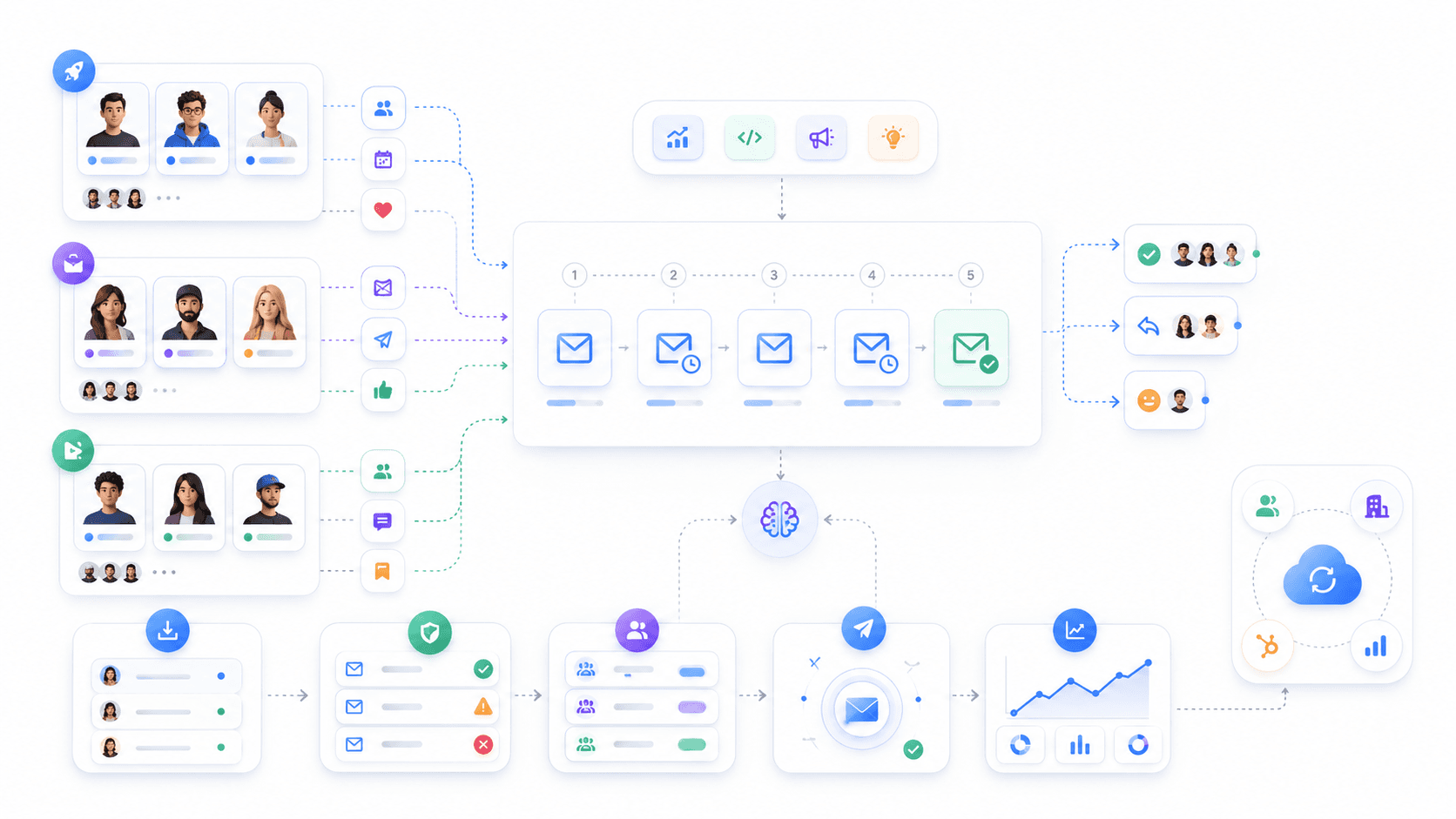
Automate the entire process
Connect every part of the system:
-
Email scraper / email scraping → export to CSV or Google Sheets.
-
Email verification → labels verified emails and risky emails.
-
CRM tools or a cold email platform → imports segments, launches sequences, and tracks opens, replies, and positive responses.
Some tools also include advanced features such as domain search and email pattern detection to grow your list in a controlled way. Throughout this, keep an eye on:
-
Sender reputation, bounce rate, and spam complaints.
-
Performance by source, segment, and message.
When you maintain this feedback loop, social media scraping and email scraping become a stable, efficient lead generation engine that lets you run outreach effortlessly without a huge team.
Frequently asked questions
Is social media scraping legal for cold email outreach?
It depends on your jurisdiction and how you use the data. Scraping publicly available data from social media is usually less sensitive than using private data, but sending cold emails must still comply with regulations like the CAN-SPAM Act, GDPR, and local laws. Stay targeted, relevant, and always offer a clear opt‑out.
How many contacts do I need before launching a cold email campaign?
You do not need thousands of contacts. Starting with 200–500 well‑scraped, verified, and segmented contacts is enough to validate your positioning and message. A smaller list of qualified leads is more powerful than a huge, noisy database.
What is a good reply rate for a scraped cold outreach list?
Average cold outreach reply rates are often in the low single digits, but with a clean list, strong ICP fit, and real personalization, you can aim for significantly higher, especially on focused segments. If your reply rate is close to zero, the issue is usually ICP, list quality, or message relevance.
Should I buy email lists instead of scraping social media?
Buying lists is faster but usually means outdated data, low context, higher bounce rates, and weaker engagement. Scraping from social media and other public sources takes more initial effort but gives you fresher data, context for personalization, and better control over list hygiene.
How often should I clean and update my scraped email lists?
You should re‑verify active segments every 1–3 months or before any large new campaign, especially if you have not emailed that segment recently. This keeps bounce rates low and protects your sender reputation over time.
Can I use the same cold email template for all segments?
You can use the same structure, but you should not use a single generic template. Different industries, roles, and sources respond to different angles, so adjust subject lines, openers, and examples for each segment to keep messages relevant.
What tools do I need to implement this workflow?
At minimum, you need a social media scraping / email scraper tool to perform data extraction and scraping emails from your target platforms, an email verification tool to check validity and reduce bounce, and a CRM or cold email platform to run your sequences and track performance.
Start your first campaign with 100 free credits
Verified emails from Instagram, Facebook, LinkedIn, X, YouTube, and TikTok — all in one cloud workflow. No card required.