What Is Cold Email? Complete Guide for Beginners 2026
What is cold email and how does it work in 2026? Learn the legal rules, key elements, and simple steps to write your first cold email that gets replies

On this page (8 sections)
What is cold email is one of the most important questions for anyone starting with outbound sales, partnerships, or B2B lead generation in 2026. When you understand cold email meaning correctly, you can turn cold outreach from "sending the same email to everyone" into a targeted system that respects the recipient's time and actually generates leads.
In this guide, you'll learn what a cold email actually is, how cold email outreach still manages to work its magic in 2026, and above all how to write a first-rate cold email all by yourself, step-by-step.
What Is Cold Email?
So what exactly is a cold email? Well, it's an email you send to a company or person you've never even talked to before - and you're sending it with the hope of sparking a new business relationship, be it sales, a partnership, a new hire, or just networking in general. It's not some generic mass email, but rather a thoughtful introduction - its like showing up to a party with a great opening line and a smile.
In simple terms, cold emails are first‑touch, outbound business messages sent to a specific recipient, where you introduce yourself and open a professional conversation. It is a form of cold contact email inside a broader outbound strategy, not just "emailing people" at random.
The telltale signs of a cold email tend to be:
-
They're laser-focused, 1 on 1 (or semi-personalized) messages, not some generic template spamming a huge email list out the door
-
They're straight-up, outbound efforts - you take the initiative and reach out to people rather than waiting for them to come to you
-
They're tailor-made to be relevant to the recipient - whether it's their job title, company, or something specific that's got them up at night
-
They're part of a well-planned campaign where you can actually measure progress - things like open rates, response rates, and how many meetings you actually book
Some real-world examples of cold emails might be:
-
A SaaS founder sending a line to the Marketing Manager at a mid-sized company to grab a quick call about boosting their lead gen
-
A recruiter sending a cold email to some potential candidate whose profile looks like they'd be a slam dunk for an open role
Semantic triples :
-
A cold email is basically defined as a first‑touch, outbound business email.
-
A cold email is all about starting that first conversation that could – with a little luck – turn into a mutually beneficial relationship.
How Cold Email Works (And Why It Still Works in 2026)
Cold outreach doesn't always lead to a response from the first email – normally it's the follow up emails that actually get a bite.
How Cold Email Works in Practice
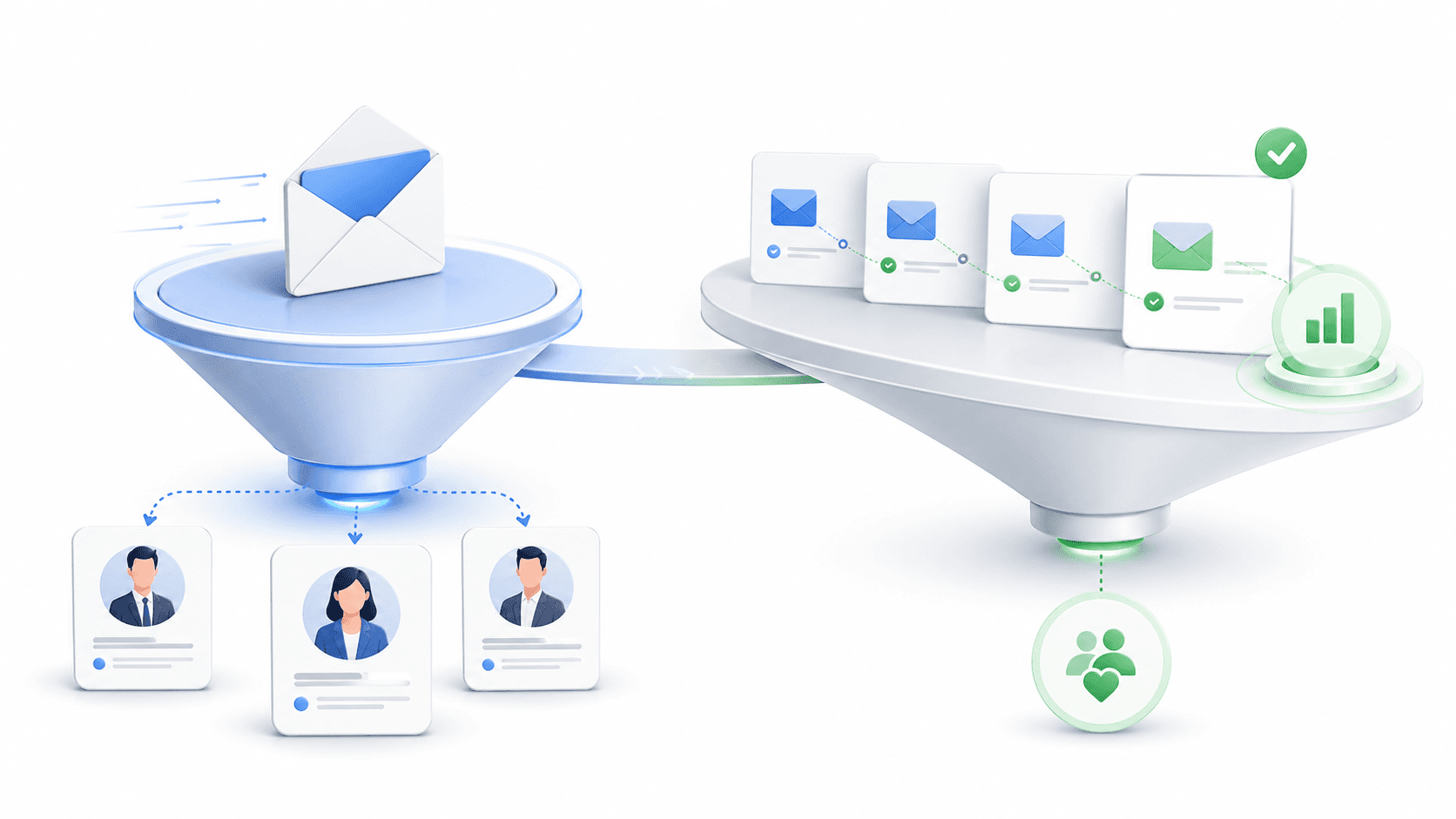
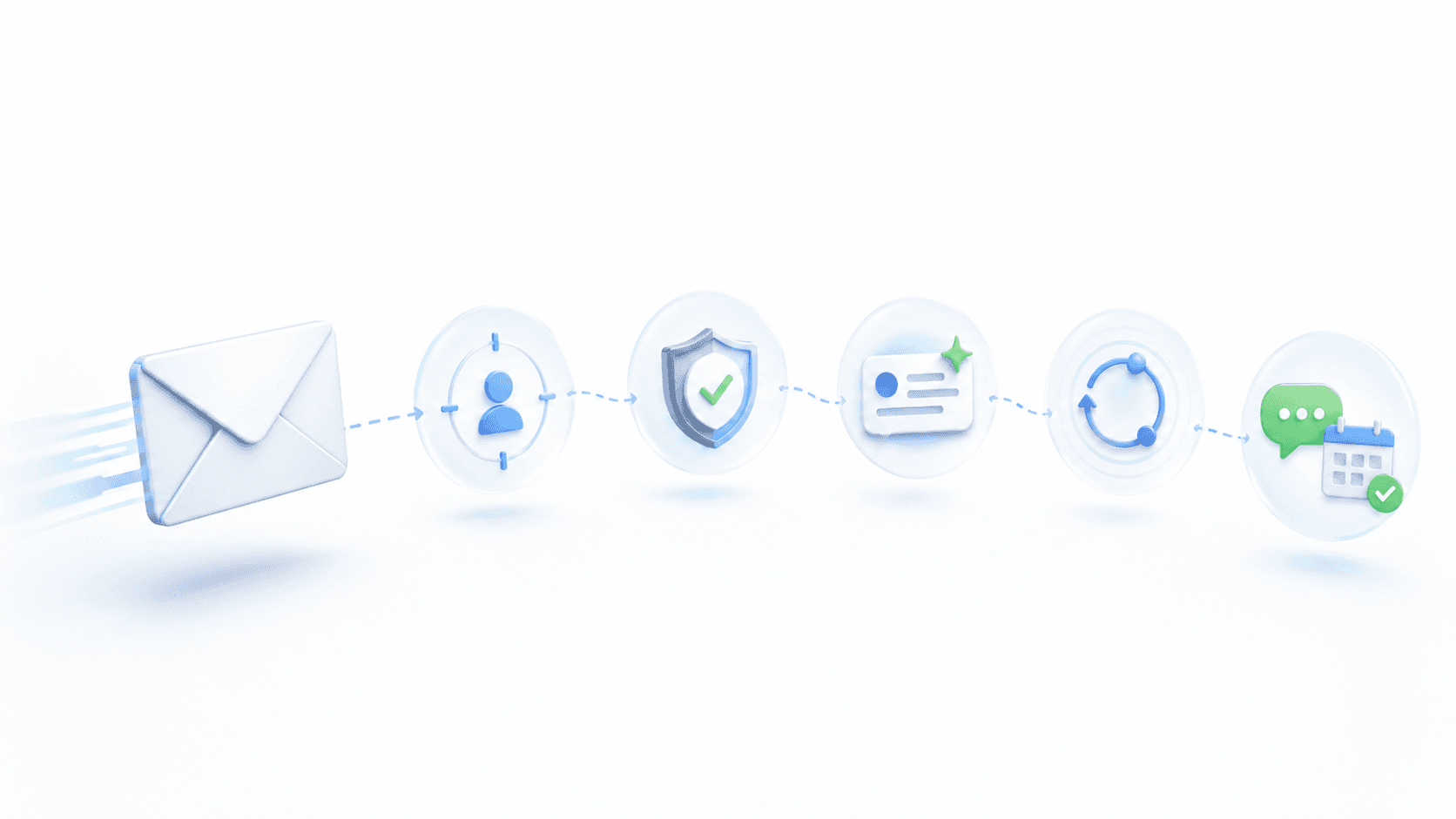
In practice, cold email campaigns follow a structured process:
-
Define your ICP and target audience
You identify the right companies and decision makers you want to reach (your ideal customer profile and personas), instead of emailing every company name you can find.
-
Find and verify email addresses
You use data sources and services to find personal emails or work addresses, then verify them to protect email deliverability and avoid spam filters.
-
Write personalized, relevant cold emails
You write a personalized message for each segment or contact, instead of a generic email that could apply to anyone. Good cold email copywriting reflects the prospect's context and pain point.
-
Send emails through a properly configured system
You send from warmed‑up domains and inboxes with correct authentication (SPF, DKIM, DMARC) and avoid deceptive subject lines or "limited time" hype that can trigger spam filters.
-
Send follow up emails with a clear structure
You send a sequence of follow up emails over several days or weeks, each adding a bit of valuable content, a new angle, or a reminder, rather than one email and hoping for the best.
-
Convert responses into calls, demos, or deals
You treat every response as an opportunity: qualify, book a quick chat or quick call, and move opportunities into your sales process.
Semantic triples for the workflow:
-
Targeting quality → strongly influences → response rate
-
Message relevance → drives → positive responses
-
Follow up consistency → improves → overall success rate
What happens when this workflow is refined and optimised is that you end up with a scaled up cold email marketing campaign that you can still keep a good sender reputation on.
Why Cold Email Still Cuts It in 2026
Loads of people ask – does cold emailing still work nowadays, with all the restrictions on email filters, all the social media ad clutter, and inboxes just stuffed to the brim with stuff?
Cold email still has its uses because:
-
Low overhead cost: Reach out to highly specific decision makers without breaking the bank on advertising, and all you're really spending is time and a relatively modest amount on tools.
-
Targeted approach: Unlike all those broad ads or cold calling for a living, cold sales emails let you actually get in touch with the exact person who has the problem your solution solves.
-
Trackable and testable: You can track what's going on - open rates, click through rates if that's relevant, and response rates. And you can use that data to improve your email strategies.
-
Scalable without losing control: Once you have a message that's working and a clean list, you can ramp up volume while still keeping that personal touch and keeping on top of email deliverability.
Cold email strategy → basically means being able to try lots of different things and test what works
Compared to paid advertising or social media marketing:
-
Ads are great for getting people aware of what you're doing but can be pretty pricey and you're not really sure who's seeing them.
-
Social media can help you build some connection and brand recognition, but starting a direct and focused conversation with people at scale is a whole lot harder.
-
Cold emailing lets you run your own experiments, test different email templates and subject lines, and build a repeatable pipeline.
But what tends to make cold campaigns go wrong is:
-
Your list is low quality (bad targeting, wrong company or wrong person).
-
You send out generic email that just ignores the prospect's pain points and what's going on for them right now.
-
You don't follow up, or just stop after sending one email.
-
You don't pay any attention to email deliverability (no warm up, poor authentication, too many sending accounts cranking out emails at once).
Is Cold Email Legal? Cold Email vs Spam
A very common concern for beginners is: is cold email legal, and how is it different from spam or deceptive email marketing?
When Cold Email Is Considered Acceptable
Cold emailing can be acceptable and legal when you respect a few core principles:
-
Legitimate business purpose: You contact people for clear work‑related reasons (sales, partnership, recruiting), not random promotions.
-
Relevance: Your cold email is reasonably related to the recipient's role, company, or pain point, not just any service you want to push.
-
Transparency: You clearly show who you are, which company you represent, and how to contact you; no misleading identity or inaccurate sender information.
-
Easy opt‑out: Every recipient can easily unsubscribe or ask not to receive more emails, and you respect that request quickly.
-
Reasonable frequency: You do not bombard people with daily follow up emails or aggressive sequences that ignore the recipient's time.
At a high level, you also need to follow the rules in the regions you target, such as:
-
GDPR in the European Union.
-
CAN‑SPAM in the United States and similar regulations elsewhere.
Semantic triple:
- Cold email legality → depends on → transparency + relevance + opt‑out
The goal of a professional cold email is to open a respectful business conversation, not to abuse personal data or trick spam filters for short‑term gains.
How Cold Email Differs From Spam
Cold email vs spam is mostly about intent, targeting, content, and honesty.
Typical spam emails:
-
Are sent in massive bulk without any target audience definition.
-
Have content that is unrelated, misleading, or deceptive, often with tricky or deceptive subject lines.
-
Often hide or obscure the sender's identity and service.
-
Rarely provide a clear and honest way to opt out.
Good cold emails:
-
Are targeted to a specific segment or ICP with clear criteria.
-
Are personalized and context‑aware, often referencing the recipient's company name, job title, or a visible pain point.
-
Clearly state who is sending the email, why you are reaching out, and what value you offer.
-
Offer a simple way to decline further communication.
Semantic triples:
-
Spam → lacks → relevance and consent
-
Quality cold email → creates → professional, mutually beneficial dialogue
So while both cold emails and spam are "unsolicited" at first glance, well‑executed cold emailing for sales, partnerships, or recruiting is fundamentally different from spam and can be both acceptable and effective when done right.
Core Elements of an Effective Cold Email
To build an effective cold email that earns opens and responses, you need to understand the core elements that consistently drive results.
Subject Line and First Impression
The subject line and the first line (preview text) create your very first impression in the inbox. Their job is not to "sell" but to earn an open and avoid looking like spam.
Good practices for cold email subject lines:
-
Keep them short and clear (around 3–7 words).
-
Make them specific and relevant to the recipient's context, not vague like "Quick question" used in every email template.
-
Avoid spammy phrases and specific words that sound like clickbait or "limited time" tricks.
Examples:
-
"Idea for your onboarding flow"
-
"About your Q2 pipeline goals"
Semantic triple:
- Subject line → impacts → open rate
The first line should continue this relevance: it is often what convinces most people to invest time in reading instead of deleting your email.
Personalization and Context
Personalization and context show that your cold email was written for this person, not for "everyone on a list".
Ways to personalize effectively:
-
Mention the recipient's role, team, or business model.
-
Refer to a recent post, product launch, announcement, or success stories they shared.
-
Connect your message to their visible prospect's pain point or current initiative.
Guiding principle:
- Write about them first, then about you.
Semantic triples:
-
Personalized message → increases → perceived relevance
-
Context‑aware opening → builds → connection
Even one or two concrete details can dramatically separate your cold email from a generic email that looks like it was copied to hundreds of people.
Value Proposition and Call to Action
Your value proposition answers the question: "What's in it for me if I reply to this cold email?"
Tips for a strong value proposition:
-
Speak to outcomes (more clients, higher revenue, faster workflows) rather than just listing features.
-
Anchor your claim in helped companies or success stories that look similar to the recipient's company.
-
Keep it simple and focused on one main benefit.
Your call to action (CTA) should:
-
Be small and low‑friction (for example, a short call, a quick chat, or a simple reply).
-
Ask for one clear action instead of multiple choices.
-
Fit naturally with the value you have just presented.
Examples:
-
"Would you be open to a 15‑minute quick call next week to see if this could fit your current process?"
-
"If it helps, I can share 2 short examples of how we've helped companies like yours — worth sending?"
Semantic triples:
-
Clear call to action → drives → response
-
Focused value proposition → increases → response rate
You can also build trust in your email signature (name, role, company, website, social proof) to reinforce credibility without overloading the main copy.
How to Write Your First Cold Email (Step‑by‑Step)
If you are a beginner, the question is not just "what is cold email" but "how do I actually write a cold email that works?". Here is a simple, repeatable framework.
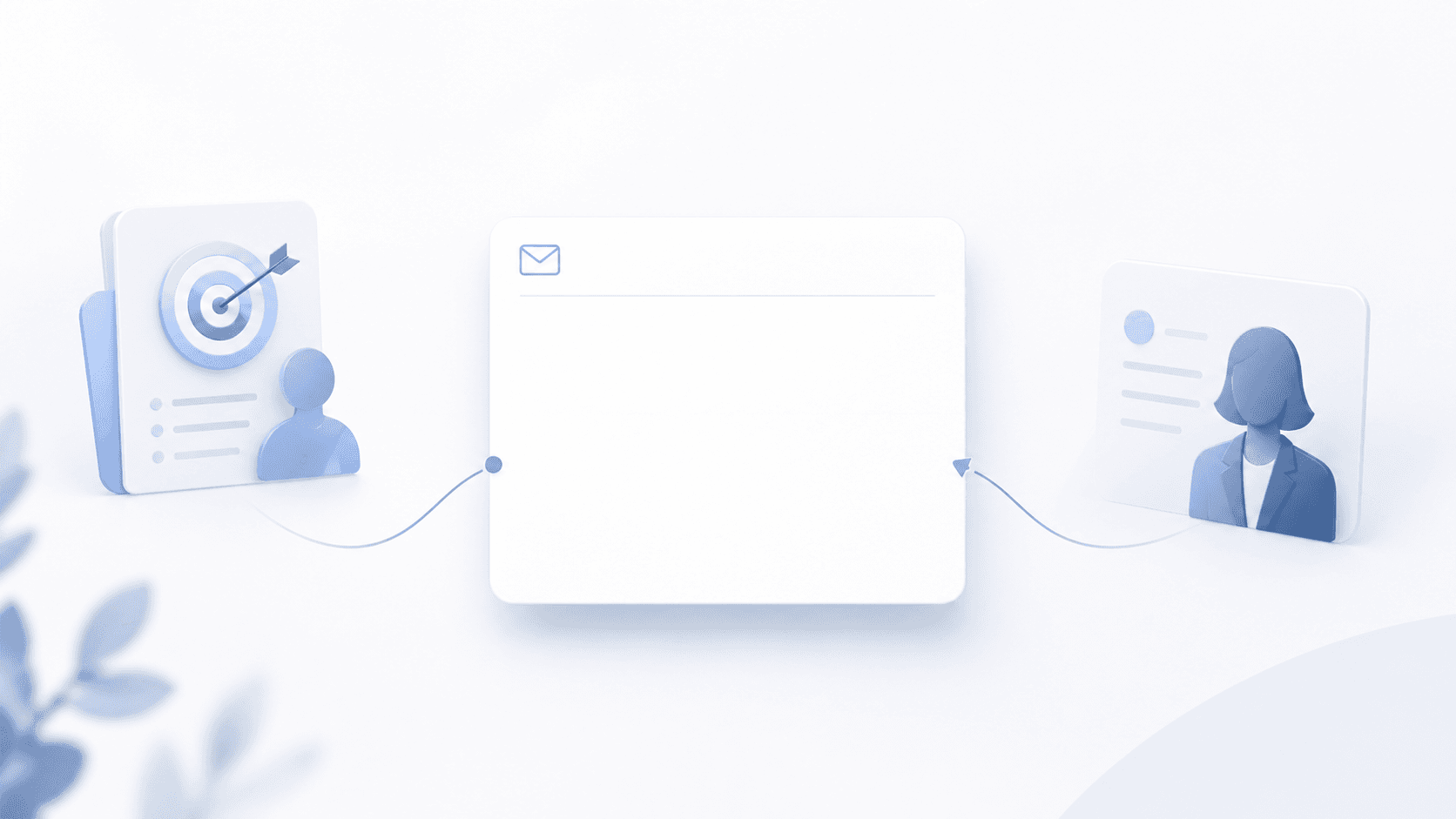
Step 1 – Define Your Goal and Recipient
Before you write anything, define:
-
Your primary goal: Do you want a reply, a discovery call, a product demo, or just an introduction?
-
Your ideal recipient: Which roles, company types, industries, or geographies are most relevant?
Examples of clear goals:
-
"I want 10 qualified demo calls per month with B2B SaaS companies' CMOs."
-
"I want to speak with 20 eCommerce founders about their retention strategy."
Semantic triple:
- Clear goal → guides → targeting and messaging
Once your goal and ICP are defined, it becomes much easier to write focused cold emails instead of the same email sent blindly to everyone.
Step 2 – Do Quick Research for Personalization
Next, do fast, focused research to personalize your cold message. You do not need to spend a lot of time per lead; often a few minutes is enough.
Useful sources:
-
Company website: positioning, product, case studies, careers page.
-
LinkedIn: role, responsibilities, posts, recent activity or promotions.
-
News or funding announcements: expansions, launches, new hires, product launch.
From this, pick 1–2 details that can drive your angle:
-
A pain point they likely face.
-
A recent change (new product, new market, funding).
-
A visible initiative (content, partnerships, PR).
Angle framework (simple):
-
Why them
-
Why now
-
How you can help
-
Soft CTA
Step 3 – Draft a Short, Clear Email
Now you can draft your first cold email using a simple structure:
-
Subject line – specific, relevant.
-
Opening line – entirely about them (personalization + context).
-
1–2 sentences of value – explain the problem you solve and possible outcome.
-
Clear CTA – ask for one small, concrete next step.
-
Email signature – name, role, company, link (and optionally social proof).
Word count guideline:
-
Aim for 50–150 words in total word count.
-
Use short paragraphs and simple, direct language.
-
Avoid jargon that does not help understanding.
Example semantic triples:
-
Short email → improves → read‑through rate
-
Single CTA → reduces → decision friction
Step 4 – Review and Send a Small Batch
Before scaling, always review and test:
-
Re‑read your cold email: Is the value obvious? Is the CTA clear? Is anything confusing or overly focused on you instead of the recipient?
-
Check for spam triggers: too many links, attachments, or hard‑sell language.
-
Send a small batch (for example 10–20 emails) to test your assumptions.
Then:
-
Track opens, responses, and the quality of each response.
-
Refine subject lines, openings, and CTAs based on real feedback.
-
Only increase volume once you see a baseline of positive signals and stable deliverability.
This "small batch first" approach protects your domain reputation and lets you learn quickly without hurting your future outreach efforts.
Best Practices and Common Mistakes for Beginners
Simple Best Practices for Your First Cold Emails
If you want to make the most of your first cold emails, here are the best practices to keep front of mind from day one:
-
Less is more: Its way better to start with a smaller list that actually targets the right person at each company, rather than sending out a load of emails to anyone & everyone.
-
Add some personality: Don't just use first names - try to add in some decent, relevant, personalisation using data and tools. Your email needs to be genuine.
-
Make it simple: Tell people what to do next, and only ask them to do one thing. Make the step after that email obvious and easy.
-
Polite follow ups work: Plan 3-5 follow up emails to go out over 1-3 weeks, each adding a bit more value or a different angle.
-
Watch your email delivery: Keep on top of how your emails are being delivered. Warm up those domains, get your sending set up right, clean your list and keep an eye on those bounce and spam rates.
Semantic triples:
-
Quality targeting → increases → reply quality
-
Consistent follow up → recovers → lost opportunities
When you apply these effective cold emailing techniques, you build a foundation for sustainable cold email marketing campaigns instead of one‑off experiments.
Mistakes That Can Tank Your Cold Email Results
There's a few patterns that just keep on hurting cold email performance, especially for people who are just starting out:
-
Blasting Un-targeted Emails: Sending the same email out to thousands of people without even breaking it down into smaller groups or making an effort to make it seem like it was written just for them.
-
Writing a Novel or a Duplicate Template: You know, those super long email pitches that are basically just a bunch of features and marketing buzzwords all strung together, or the same email template used over and over again on every single prospect.
-
Only Talking About Yourself: Instead of focusing on how your product or service is actually going to solve the recipient's problems, you're too busy going on and on about how great your company is.
-
Acting Too Pushy: *Using scare tactics or making people feel bad about themselves *in an effort to try and get a response.
-
Not Even Thinking About The Delivery: Not taking the time to warm up your email domain, sending out too much email in a short amount of time, or just never cleaning up your email list to get rid of all the dead addresses.
Semantic triples remain the same:
-
Sending generic emails really just lowers engagement
-
Poor email deliverability is gonna limit just how many people get to see your campaign in the first place
The Common Cold Email Use Cases
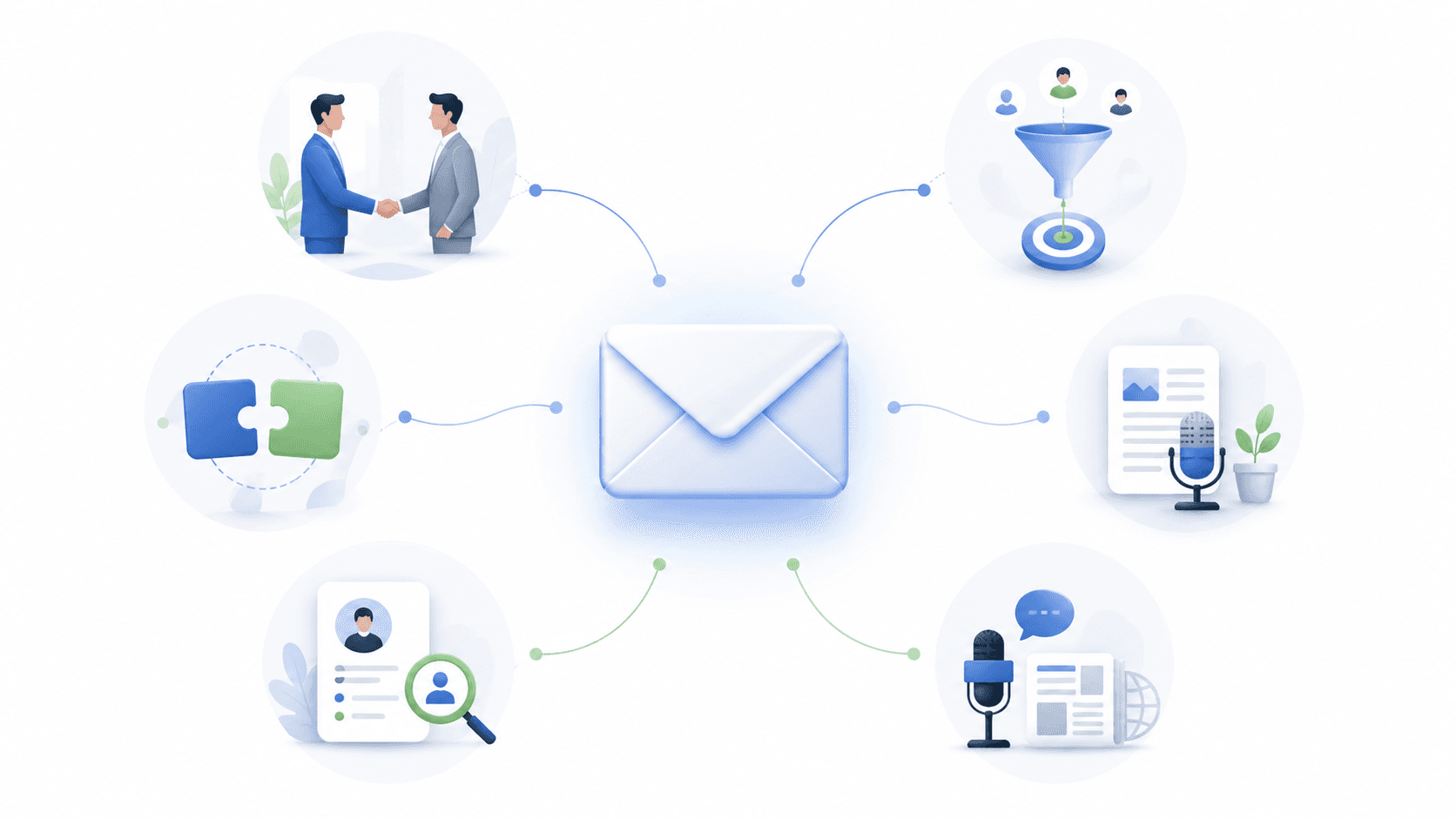
Cold emailing is a flexible marketing tool that can help you achieve several core business goals - no matter what your business looks like
-
B2B sales outreach: This is a good use case for cold emailing - contact your ideal prospects, run a cold email campaign to prospect new leads and book discovery calls or demos that can turn into new clients.
-
Lead generation for SaaS, agencies, and freelancers: If your business relies on referrals or just waiting for leads to come to you then cold email can help - systematically build a pipeline of interested leads instead of relying on word of mouth.
-
Partnerships and collaborations: Use cold email to reach out to other brands, tools and KOLs looking for co-marketing, product integrations or joint ventures.
-
Link building and content outreach: Use cold email to pitch guest posts, podcasts, webinars or backlink opportunities to relevant sites and hosts.
-
Recruiting and job hunting: If you need to find new talent or make contact with hiring managers at top companies then cold email can be a good way to do it.
-
PR and media outreach: Find out if your story is worth sharing by sending email pitches to journalists, newsletter authors or show hosts.
Semantic triple:
- [Cold email] → [fits into] → Sales + Marketing + Recruiting + PR
For a lot of business owners, marketeers, sales teams and creators cold emailing is just the fastest way to start a conversation with the people you want to talk to.
The Bottom Line: Turning "What Is Cold Email" Into A Profitable Growth Channel
By now, you should have a good idea of what cold email is beyond just a definition. It's a deliberate, data-driven way to start meaningful business conversations with a lot of people. Once you grasp the technical and strategic ins and outs of cold email, and start following best practices, you can turn cold emailing into one of your most dependable sources of growth.
Key takeaways
-
Cold email boils down to a carefully targeted, personalized email sent to people you've never met before - with a proper, professional purpose in mind.
-
There are three essential components to success: A decent understanding of who your targets are, how to craft a relevant message, and how to make sure you deliver it successfully (and follow up if necessary).
-
Even a complete newbie can get some traction by taking it small, learning from the feedback you get, and gradually refining your cold email approach over time.
But if you're serious about building a genuinely effective cold email campaign, you'll need to get your hands on some reliable, up to date contact data -…rather than relying on questionable guesses or outdated lists. Scravio can help you track down and verify the right email addresses, so your cold email outreach lands on real people's inboxes, not just gets bounced.
You can head on over to scravio.com and claim 100 free credits to get started on finding and verifying emails for your next cold email campaign right away. After you've got this guide under your belt, the next logical step would be to dive deeper into topics like cold email templates, response rate optimisation, and outreach best practices - so you can keep building and improving your playbook.
Frequently asked questions
What is a Cold Email In Simple Terms?
A cold email is a professional email sent to someone you have never met before, with the goal of starting a work-related conversation. Think of it like a polite first introduction or a mutual connection happening on your behalf.
Can Cold Emailing Work If I'm Just Starting Out?
Yes, provided you do it right. That means targeting the right people, writing something clear and polite with a real value proposition, and following a simple system with testing and follow ups. You don't need to be a 'cold email master' to get results — just apply the basics consistently and you'll see improvements with every campaign.
How Many Cold Emails Should I Send at the Start?
Start small so your sender reputation and inbox health don't take a hit. Around 10–20 cold emails per day per inbox is a safe starting point. Track opens, bounces, and replies, then gradually increase volume each week as long as deliverability stays healthy. Rushing into large sending volumes can damage your sender score and make future campaigns much harder.
How Do I Find Emails for Cold Emailing?
There are several ways to find emails for cold outreach: company websites (team pages, founder emails, role-based addresses), LinkedIn and other social platforms combined with tools that infer or verify work email formats, events and online communities where your audience gathers, and dedicated email discovery and verification services that support bulk enrichment. Always verify email addresses before sending at scale to keep bounce rates low and protect deliverability.
Is Cold Email Legal in 2026?
Cold email can be legal when you respect a few core principles: legitimate business purpose, relevance to the recipient, transparent sender identity, an easy opt‑out, and reasonable frequency. You also need to follow regional rules such as GDPR in the European Union and CAN‑SPAM in the United States. Cold email becomes problematic when it crosses into deceptive subject lines, hidden identity, or refusal to honor opt‑outs.
Start your first campaign with 100 free credits
Verified emails from Instagram, Facebook, LinkedIn, X, YouTube, and TikTok — all in one cloud workflow. No card required.