How SaaS Founders Use LinkedIn to Find Their First 100 Customers
Learn how SaaS founders use LinkedIn to get their first 100 customers with a clear, step‑by‑step strategy for ICP prospecting, outreach, and tracking results

On this page (8 sections)
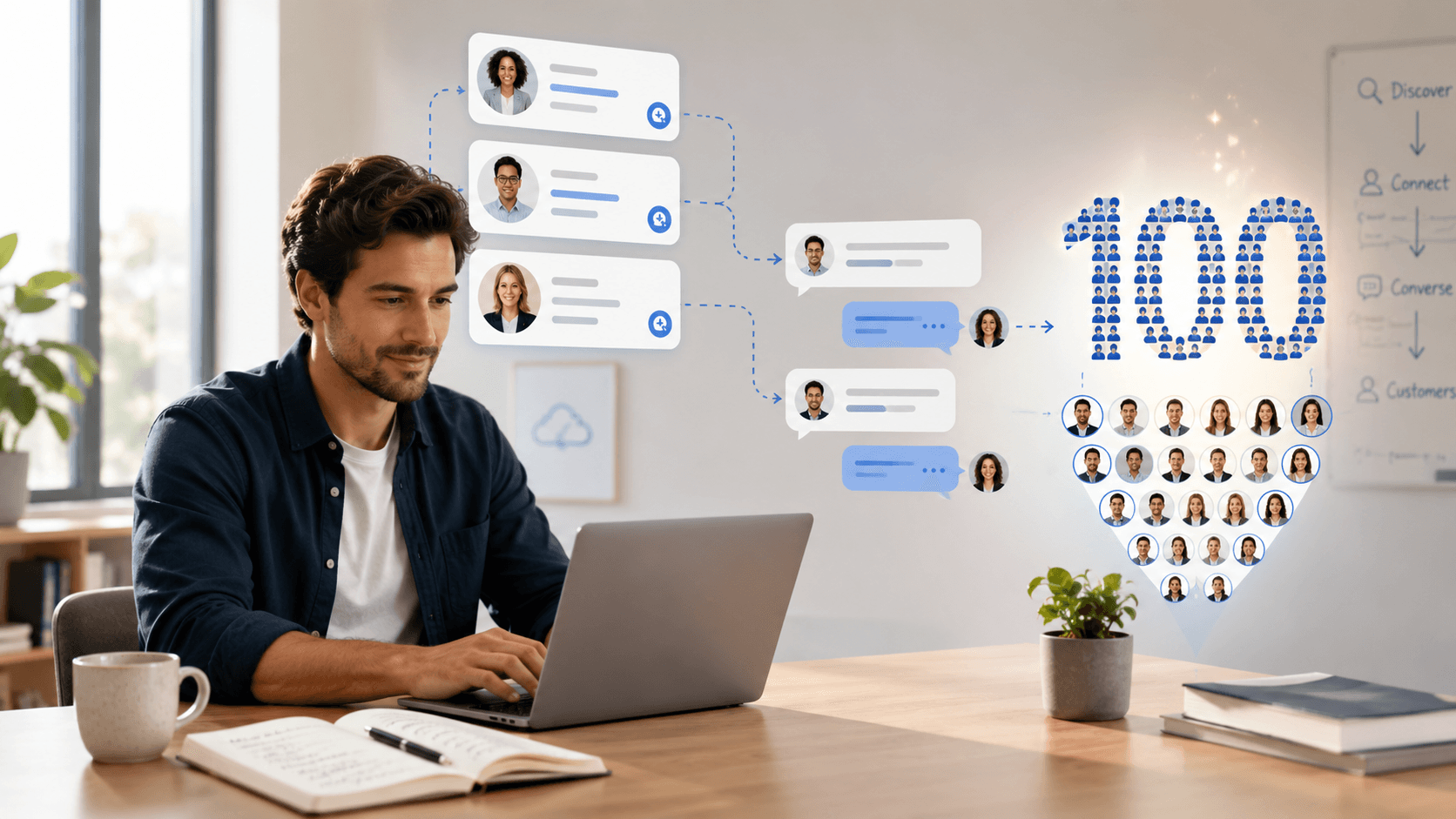
Getting your first 100 customers for a SaaS startup often feels harder than building the product itself. Many founders read "how to get your first 100 customers SaaS" guides, try a bit of everything—paid ads, content marketing, online communities—and still struggle to turn early users and early adopters into paying customers.
In reality, acquiring your first customers for a SaaS business usually requires a shift from broad marketing to high‑touch, direct engagement with a very specific target audience. LinkedIn is one of the best channels to do that because it lets you identify ideal customers, start one‑to‑one conversations, and get early feedback from real users before you scale to other platforms like Product Hunt, Facebook groups, or Reddit forums.
Why LinkedIn Is a High‑Intent Channel for Your First 100 SaaS Customers
LinkedIn is one of the most effective ways to get first customers for SaaS because it concentrates your ideal customers in a single, searchable network. Instead of guessing where potential customers might be, you can see their roles, companies, and problems directly on their profiles.
-
LinkedIn gathers SaaS founders, marketers, sales leaders, and RevOps managers who live with the pains your product solves every day, making it easier to reach early customers and prospective clients who actually care.
-
Profiles include key data points—job title, industry, company size, region, sometimes tools used—that you can turn into refined filters to reach the right audience instead of "most people".
-
InMail, DMs, and comments let you run respectful cold outreach and personalized messages, which is still one of the most effective ways to win new customers when done well.
Compared to throwing money at paid ads or trying every social media channel at once, focusing your early days on LinkedIn gives you a tight feedback loop: you talk directly to real users, update your landing page and messaging based on honest feedback, and move towards product‑market fit before you invest heavily in one‑to‑many marketing.
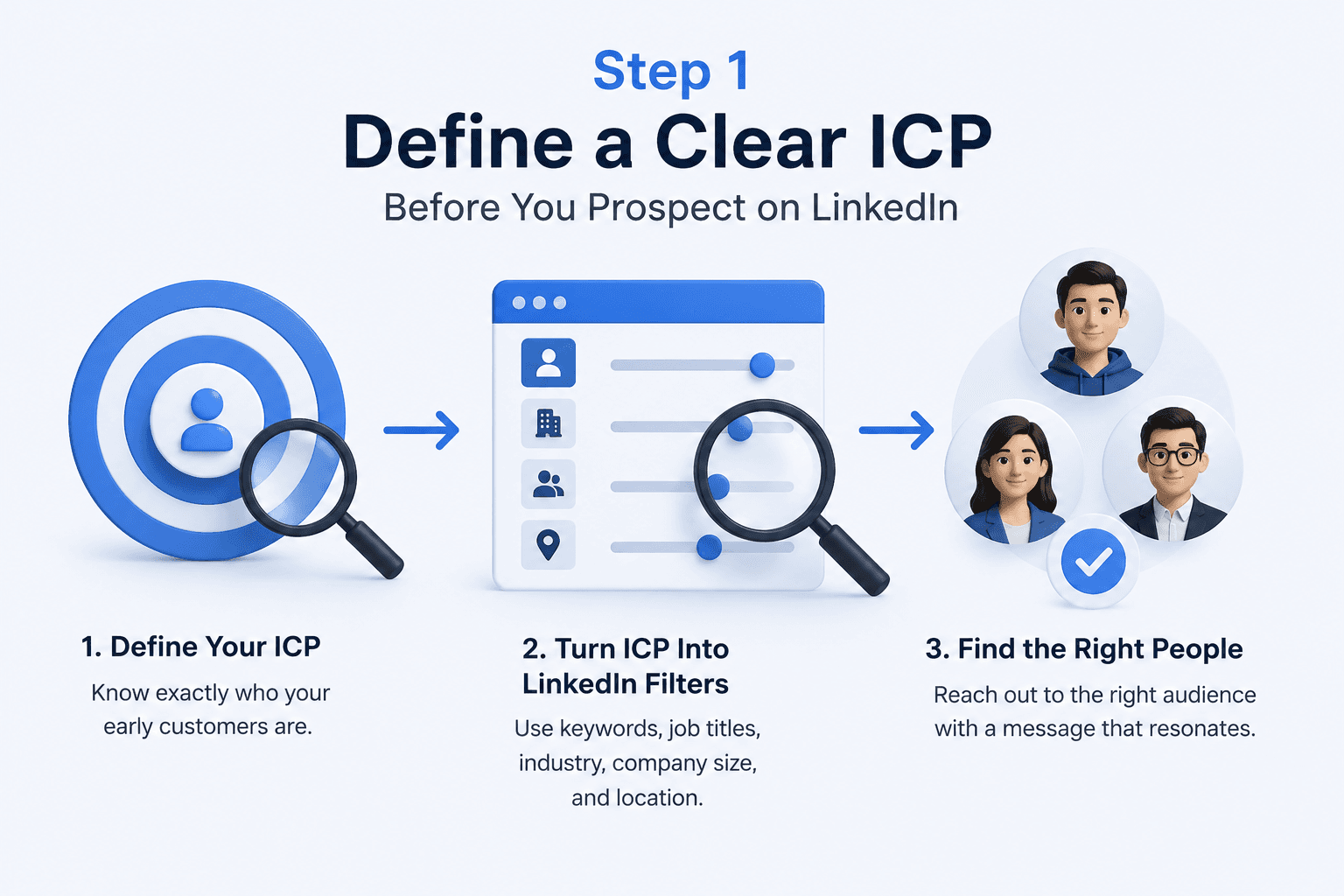
Step 1 – Define a Clear ICP Before You Start Prospecting on LinkedIn
Before you think about growth hacks or BOFU content, you need to know who your early customers should be. A clear ICP makes your manual outbound and LinkedIn prospecting efficient instead of random.
Define your ICP quickly with 3 questions
A practical way to define ideal customers for your first 100 users is to answer three questions:
-
Who feels the problem your SaaS solves often enough that they actively look for solutions or build side projects to fix it?
-
What workaround or tool stack are they using now (spreadsheets, manual copy‑paste, multiple SaaS tools), and how much time or revenue they lose because of it?
-
What outcome would make them say, "If you can do just that reliably, I will pay for it"—more qualified meetings, higher conversion rate, less manual work, or better reporting?
Write down 1–2 ICP personas such as:
-
"Technical founders at early stage SaaS companies (1–10 people) who need a dozen customers to validate their idea and get early feedback."
-
"Heads of Demand Gen at B2B SaaS companies (11–50 employees) who want more consistent outbound results without expanding headcount."
These ICPs represent your early adopters—the first users who help you validate your product idea and shape it through their feedback.
Turn your ICP into LinkedIn keywords and filters
Now translate your ICP into LinkedIn search filters so you can find the right audience:
-
Job Titles: Founder, Co‑founder, Head of Marketing, VP Sales, Growth Lead, RevOps Manager.
-
Industry: "Computer Software", "Internet", "Information Technology & Services", or the vertical you serve.
-
Company Size: 1–10 for very early companies; 11–50 or 51–200 if your product fits more mature teams.
-
Location: Markets you can support and understand (US, UK, EU, SEA, etc.).
Example search combinations:
-
"Co‑founder" + "B2B SaaS" in keywords + 1–50 employees + United States.
-
"Head of Marketing" + Industry: "Computer Software" + 11–50 employees + Europe.
You can do this with the free version of LinkedIn; later, Sales Navigator makes it easier to save searches and refine them, but the logic remains the same.
Step 2 – Turn Your LinkedIn Profile into a Simple Landing Page for Your SaaS
In the early days, your LinkedIn profile is often the first "landing page" early customers see. It must clearly explain who you help, what problem you solve, and how potential clients can talk to you or try your product.
Write your headline around the problem you solve
Avoid vague titles like "Founder at X". Instead, write for your target market:
"I help [ICP] get [result] with [product/approach]."
Examples:
-
"I help SaaS founders get their first 100 customers using targeted LinkedIn + cold outreach."
-
"I help B2B teams turn social media profiles into verified cold email lists in days, not weeks."
-
"I help early stage founders validate their SaaS idea with real users before they spend on paid ads."
Your headline should pass the "short answer" test: in one line, a visitor should understand what you do and whether you might be relevant to them.
Turn your About section into a short pitch
Your About should feel like a focused "how to" guide for your ICP:
-
Problem: "Most SaaS founders struggle to get their first users without overspending on ads or trying random growth hacks."
-
Solution: "I work with them to use one channel—LinkedIn—to identify ideal customers, run cold outreach, and book conversations that turn into early customers."
-
Result: "This helps them close their first handful of customers, validate their value proposition, and move towards product‑market fit."
-
Call to Action: "If you're in your early days and want to compare notes, send me a message or grab a slot here: [link]."
This structure builds trust by showing that you understand their pain points and care about ongoing value, not just a quick sale.
Arrange Featured and links for easy booking
Use your Featured section to guide potential customers to the next step:
-
A clear landing page (or mini site) describing your product, who it's for, and why early adopters should care.
-
A calendar link where prospective clients can book a short discovery call or free consultation so they can see the product in action.
-
One or two simple case studies from early customers that highlight before/after results—even if they're small wins.
Networking and offering free consultations or early access trials can transition potential leads into active users as they witness value firsthand.
Step 3 – Build a Small but Targeted Audience on LinkedIn (Without Posting Every Day)
You do not need daily posts or viral threads to reach early adopters. You need a small, relevant network that sees you as someone who solves a specific problem.
Pick 2–3 content themes around your customer's pain
A lean LinkedIn content strategy for SaaS can revolve around:
-
"How to get your first 100 customers SaaS without paid ads."
-
"Cold outreach and personalized emails that actually get replies for SaaS companies."
-
"Lessons learned from talking to early customers: what they really want and what they ignore."
You can also "build in public" by sharing parts of your development journey, your first data points, and early feedback from real users, which helps you gain initial credibility and social proof.
Use comments to appear in front of the right people
Instead of forcing yourself to post daily, spend time in relevant communities on LinkedIn:
-
Comment thoughtfully on posts from other founders, investors, and creators your ICP follows.
-
Share concrete experiences, answer questions, and occasionally link to how‑to guides or resources you've created.
-
Avoid promotion; focus on helping people move in the right direction with short, useful insights.
This kind of participation mirrors what works in other online communities like Facebook groups, Reddit forums, and niche Slack channels: show up, answer questions, and build trust before you talk about your product.
A 30–45 minute daily LinkedIn routine
A realistic daily routine for early stage founders:
-
Check notifications (5–10 minutes): reply to DMs, comments, and accept relevant requests.
-
Engage (10–15 minutes): comment in relevant threads, answer questions, and add value in front of your target audience.
-
Outbound (10–20 minutes): send connection requests, follow‑ups, and DMs to people from your 100‑prospect list.
Executed consistently, this routine is enough to build trust, start conversations, and bring early customers into your network.
Step 4 – Use LinkedIn Search to Build a 100‑Person High‑Intent Prospect List
Instead of blasting messages to thousands of random people, build a focused list of about 100 ideal customers and talk to them well.
Set fixed filters for your ICP
Use your ICP to create a "template" search:
-
Role (e.g. Founder, Head of Marketing).
-
Industry aligned with your problem space.
-
Company size by employee count.
-
Geography that matches your go‑to‑market.
Save your core searches (or use Sales Navigator later to manage them more easily), so every week you can add a few new prospects who match your criteria.
Create fast qualification rules when scanning profiles
To avoid overthinking, use simple "include/exclude" rules:
-
Does this person clearly own the problem your SaaS solves?
-
Does their company type and size match your ideal customers?
-
Are they active enough on LinkedIn that a DM won't feel like screaming into the void?
-
Is there any sign of the specific pain you solve in their posts, job ads, or activity?
This manual outbound, even if it feels slow, lets you precisely target individuals with the exact problem your SaaS solves and usually works better than generic selling techniques at this stage.
Stop at your first 100 prospects instead of hoarding leads
Especially in the early days, a list of 100 well‑qualified prospects is plenty:
-
It is enough to run thoughtful cold outreach and learn which messages resonate.
-
It gives you enough attempts to acquire early customers and get critical feedback on your onboarding and product.
-
It can realistically yield your first dozen customers if you're solving a real problem and your outreach is solid.
Store this in a simple sheet or CRM, then later enrich it with email addresses to run cold email in parallel.
Step 5 – Start Non‑Spammy Conversations with Your Ideal SaaS Customers on LinkedIn
Now you have a list and a profile that converts; the next step is outreach that feels human, not automated.
Short, context‑aware connection request templates
Your connection requests should be:
-
Short.
-
Respectful.
-
Clearly relevant to the recipient.
Examples:
-
"Hey [Name], saw your post about outbound for SaaS—great perspective. I'm working with early stage founders on the same problem and would love to connect."
-
"Hi [Name], noticed you lead [team] at [company]. I help similar SaaS companies get their first customers through LinkedIn + cold email. Thought it might be useful to stay connected."
Cold outreach can absolutely include former colleagues, industry contacts, or friends who now fit your ICP—your immediate network is often the fastest path to your first handful of customers because trust already exists.
A DM framework from "hello" to "let's jump on a call"
Once someone accepts, think of your DMs as a short sequence:
-
Context: refer to something specific—role, a post, a funding round, or a pain they mentioned.
-
Question: ask a short, open question about how they currently handle the problem you solve.
-
Offer: if there's a clear match, propose a quick call, free consultation, or early access trial.
For example:
"Hey [Name], thanks for connecting. I saw you're hiring SDRs and ramping outbound—curious how you're currently generating new customers from LinkedIn and cold email. Anything in that process that feels too manual or fragile right now?"
Then, if they respond, you can offer a short call where you diagnose their situation and show how your product could help. Effective cold outreach—whether via DM or email—focuses on solving a real problem for the recipient rather than promoting the product itself.
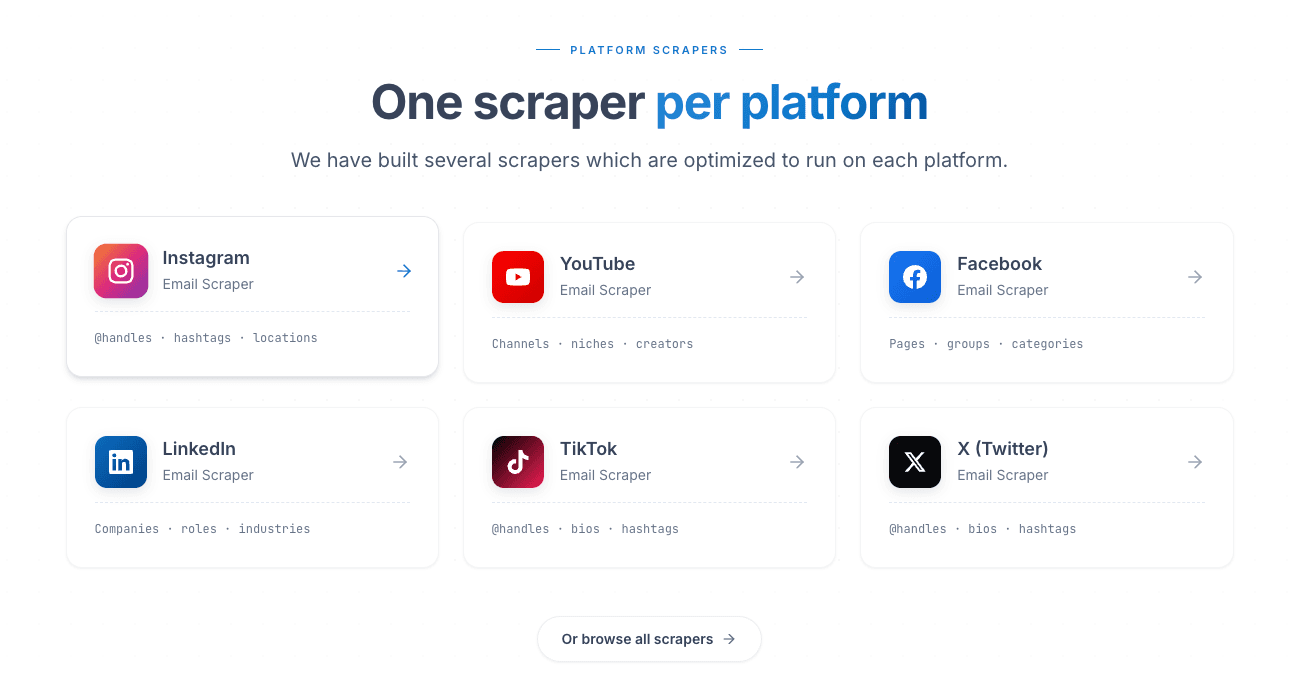
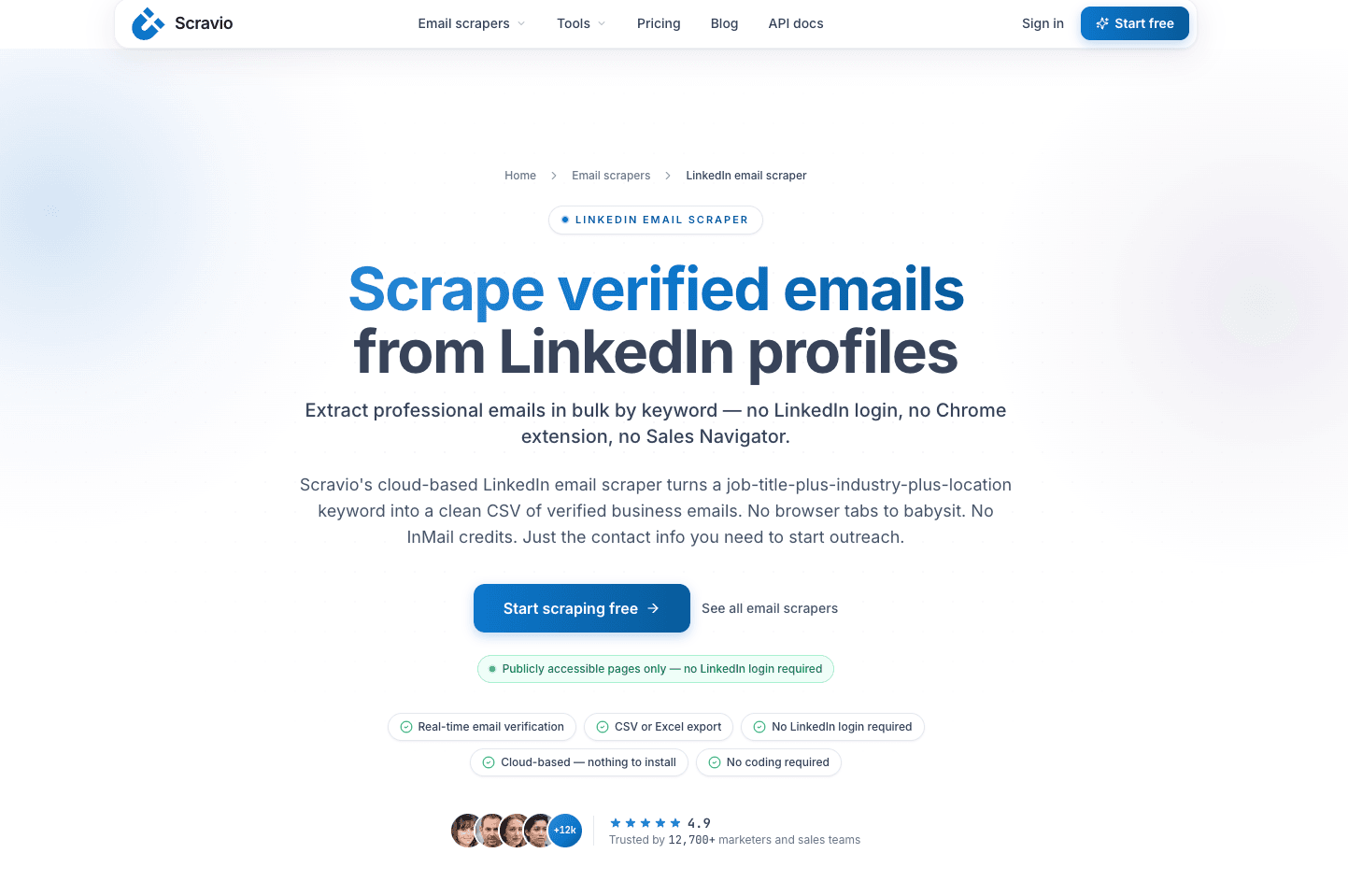
Once you know which types of prospects respond well on LinkedIn, you can mirror the same outreach via cold email to increase your total touchpoints. The key is to keep the same level of personalization—short, relevant, and problem-focused—whether you are in their inbox or their DMs. If you do not want to build those email lists manually, Scravio lets you extract and verify emails from social platforms so you can re-use your LinkedIn prospecting work across both channels.
A light follow‑up sequence over 1–2 weeks
Most replies will not come from your first message. Use a simple follow‑up schema:
-
Day 3: send a short resource—a loom, a one‑page "how to", or a small case study from an early customer.
-
Day 7: ask a clarifying question like "Is this something you're actively working on this quarter, or more of a 'later this year' project?"
-
Day 14: a friendly close: "Totally okay if timing is off. If you ever want to compare how other SaaS founders handle this, happy to share what's working."
This sequence respects their time, keeps the door open, and lets the conversation feel natural instead of pushy.
Step 6 – Track a Simple Funnel from LinkedIn to Paying SaaS Customers
You do not need fancy dashboards, but you do need a simple funnel to understand where things work and where they break.
Basic funnel:
-
Connection requests sent.
-
Connection requests accepted.
-
Conversations started.
-
Calls, demos, or free consultations booked.
-
Trials started and customers closed.
Track weekly:
-
How many people you contacted.
-
Acceptance and reply rates.
-
How many calls converted into active users or early customers.
The initial phase of acquiring customers is crucial for establishing product‑market fit, because it forces you to clarify your target audience, value proposition, and onboarding. Early customers validate your product idea, help you refine key features, and often become your best marketers through referrals and word‑of‑mouth once they see value.
As you add more customers, start tracking churn rate and retention too—these metrics show whether users see ongoing value beyond the first few weeks and help you identify where to improve customer experience.
30‑Day LinkedIn Action Plan for SaaS Founders
Here's a simple 30‑day action plan that combines everything above.
Week 1 – Finalise ICP and profile
-
Define 1–2 ICPs based on people you believe will be strong early adopters.
-
Rewrite your headline and About to speak directly to early stage founders or teams with the problem your SaaS solves.
-
Add a landing page, booking link, and at least one mini case study to your Featured section.
Result: your profile functions as a clear landing page that converts profile views into conversations.
Week 2 – Build your first 100‑prospect list
-
Turn your ICP into saved LinkedIn searches.
-
Each day, review a batch of profiles and apply your fast qualification rules.
-
Build a 100‑person list of ideal prospective clients and log them in a sheet or CRM.
Result: a focused list of people in your target market you can reach via LinkedIn and, later, personalized email.
Week 3 – Start outreach and book your first calls
-
Send 10–20 personalised connection requests per day.
-
Use your DM framework to move from connection → conversation → call.
-
Offer free consultations, beta access, or early trials in exchange for honest feedback.
Result: real conversations, early feedback, and your first customers, not just "leads".
Week 4 – Improve your messaging and increase volume
-
Review your funnel: which segments respond best, which messages perform, and where drop‑offs occur.
-
Refine your copy, landing page, and onboarding based on early feedback.
-
Gradually increase outreach volume while keeping every message relevant and personalised.
Result: a repeatable LinkedIn playbook to acquire early customers and a clearer sense of whether you're approaching product‑market fit.
From here, you can extend beyond LinkedIn: launch on Product Hunt to reach more early adopters, join niche communities, and run cold email campaigns using enriched data from your LinkedIn list.
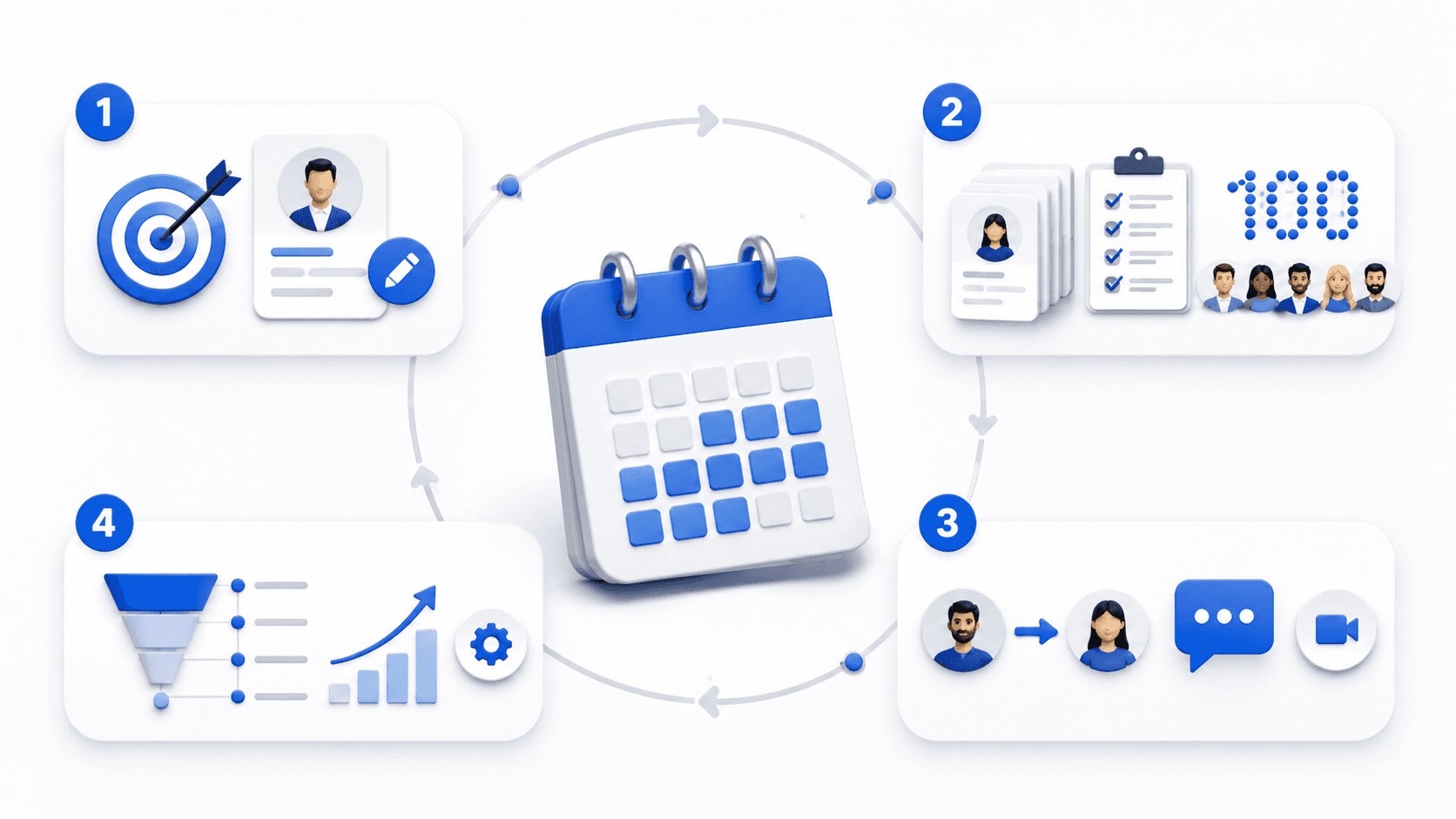
Used well, LinkedIn can take you from zero to your first 100 SaaS customers through focused, high-touch conversations with the right people. Once that engine is working, the natural next step is to scale it by pairing LinkedIn with targeted cold email using the same ICP, the same messaging, and more touchpoints.
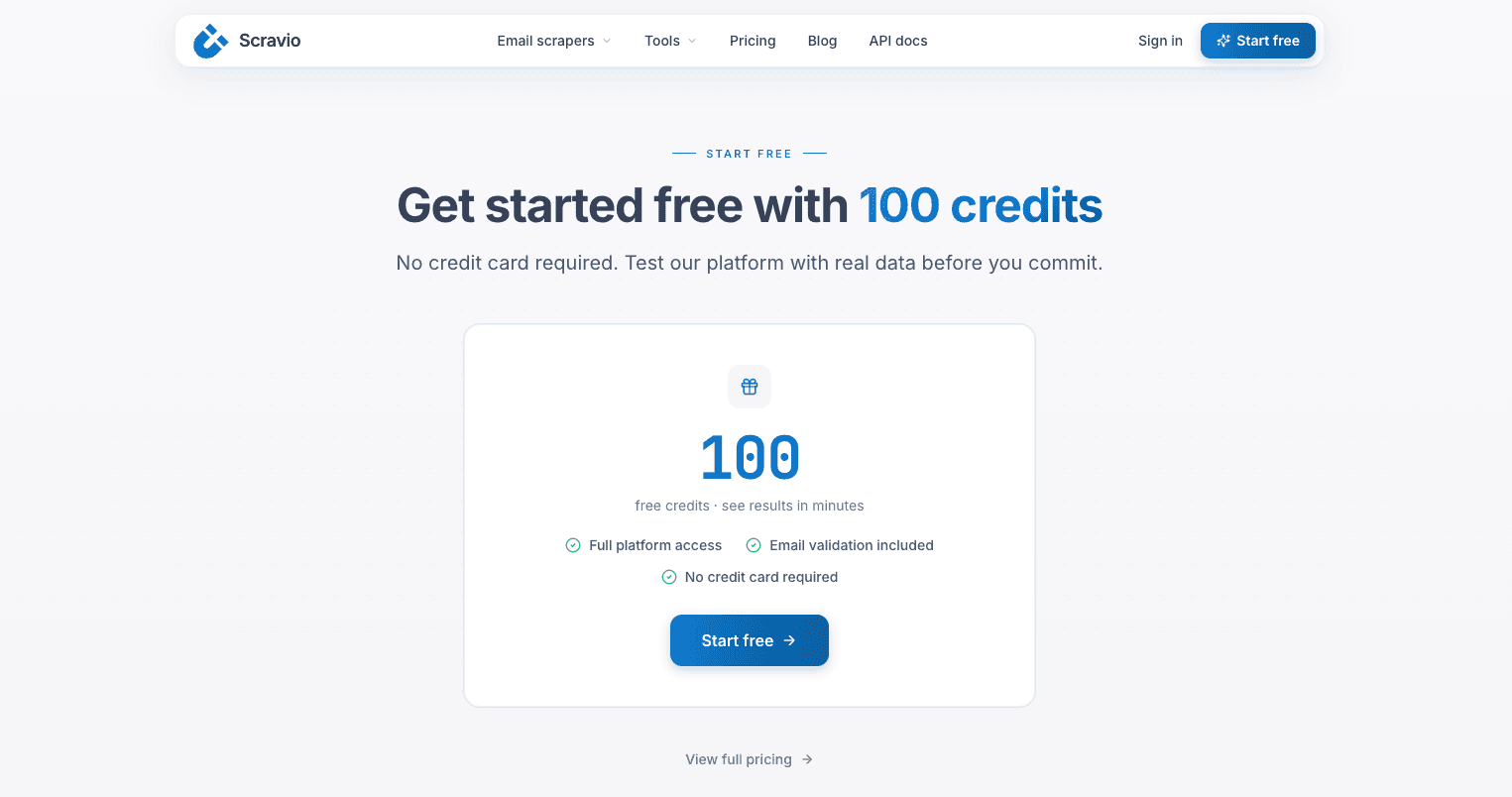
If you want to skip the manual work of turning social profiles into outreach-ready email lists, you can try Scravio. It helps you build clean, verified email lists from LinkedIn and other social platforms, so your founder-led outreach stays highly targeted even as you increase volume. Start with a curated 100-person prospect list, then use your 100 free credits on Scravio to turn that list into a scalable outbound engine
Frequently asked questions
Do I need LinkedIn Sales Navigator from day one?
No. In the early days, you can get your first dozen customers using the free version of LinkedIn. When your manual outbound is working and you consistently hit search limits or want more refined filters and saved lists, Sales Navigator becomes a helpful upgrade.
What should I say if I do not have case studies or big logos yet?
Be transparent about being early, and focus on a very specific problem. Offer early access, free consultations, or a beta in exchange for honest feedback and a short testimonial later. Even simple case studies from your first customers—just a few sentences describing before and after—can build trust and encourage new users to engage.
How much time do I really need to spend on LinkedIn each day?
Most SaaS founders can make real progress with 30–45 minutes per day. Split it between answering messages, commenting in relevant communities, and sending targeted outreach. Consistency matters more than volume; a month of steady effort almost always beats a few random "pushes."
How many LinkedIn messages per day should I send without looking spammy?
A good range for early stage is 10–25 personalised messages per day. Focus on short, respectful messages that show you understand the recipient's situation and that you've done basic research. Effective cold outreach, including cold email, is about relevance and clarity, not volume.
Is LinkedIn alone enough to get my first 100 SaaS customers?
For many founders, yes. If your ICP is active on LinkedIn and you run a focused outbound motion, you can get early customers, validate your product, and learn what resonates. Over time, layer in additional channels like Product Hunt, content marketing, and online communities to diversify acquisition and create more "bottom of the funnel" opportunities.
When should I start using email in addition to LinkedIn DMs?
Once your message works on LinkedIn and you know which profiles convert best, adding personalised cold email helps you reach people who rarely check LinkedIn. At that point, using an email scraping or email finder tool to turn your LinkedIn list into a clean email list lets you run multi‑channel outreach that combines social touchpoints and email.
What if I feel uncomfortable "selling" in LinkedIn DMs?
Treat early conversations as research and collaboration, not hard selling. Ask targeted questions, listen closely, and offer ideas or resources that genuinely help. This approach aligns with what works best for early adopters: they want to be heard, influence the product, and see that you care about solving their problem—not just closing a deal.
Start your first campaign with 100 free credits
Verified emails from Instagram, Facebook, LinkedIn, X, YouTube, and TikTok — all in one cloud workflow. No card required.